Enlighten Tusk Publishing‘s editorial team has prepared this assessment of the novel’s strengths, themes, and overall impact. They have also selected Saving the Karamazovs for representation to a film company as a potential adaptation project.
Editorial Note:
This book review was prepared by our editor, Ellen J. Ward, and completed on November 07, 2025. After careful consideration, we have selected Saving the Karamazovs for representation to a film company.
Set against the backdrop of the 1990 Gulf War and the volatile world of high-stakes business, Saving the Karamazovs by Gary Goldstick is a powerful and deeply human family drama about loyalty, ambition, and the moral cost of success.
The story centers on three brothers—Jeff, Kevin, and Jerry Bascomb—whose personal rivalries and emotional wounds spill into the corporate battlefield when their family company faces financial collapse. Jeff, a Vietnam veteran haunted by failure, struggles to protect the people who depend on him as scandal threatens to destroy everything he’s built. His older brother, Kevin, once the steady anchor, is now a shadow of himself, battling poor health and depression. Their youngest brother, Jerry, a Wall Street prodigy, is called home to save the family business—only to fall in love with Jeff’s mistress, Helen, and ignite a chain of betrayals that could devastate them all.
Goldstick, drawing from his own 30-year career as a management consultant, writes with striking authenticity about the pressures of leadership, the fragility of ethics under stress, and the quiet desperation that often drives successful people to self-destruction. The novel’s corporate realism gives it a unique texture—readers can feel the tension in boardrooms and backrooms alike—but what truly elevates the book is its psychological and emotional depth.
Like Dostoevsky’s The Brothers Karamazov, which clearly inspires it, Saving the Karamazovs is less about business than it is about the human heart under siege. The Gulf War serves as a fitting mirror to the Bascombs’ own private war—each brother fighting for love, validation, and forgiveness in a family torn apart by pride and secrets.
Goldstick’s prose is sharp, grounded, and cinematic. His pacing balances the weight of financial intrigue with intimate character moments that linger long after the final page. At times, the story delves deep into corporate detail, which may slow the rhythm for readers more attuned to emotional drama, but it’s precisely this realism that makes the book so believable.
In the end, Saving the Karamazovs is a gripping and thought-provoking novel—part family saga, part moral thriller. It’s a story about what it means to lead, to love, and to lose everything in pursuit of redemption. Intelligent, authentic, and emotionally resonant, Gary Goldstick’s debut work of fiction stands as a testament to how personal wars can be just as destructive—and just as revealing—as the ones fought on the world stage.
Verdict:
A powerful and intelligent family drama that blends corporate realism with emotional truth. Saving the Karamazovs is as morally complex as it is deeply human—a modern story of guilt, ambition, and the fragile bonds that hold families together.
— Reviewed and endorsed by The Editorial Review Board
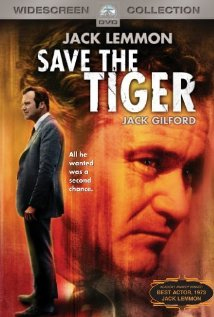 Save the Tiger by Steve Shagan (the 1973 screen adaptation won Jack Lemon an Oscar) is a business novel. Harry Stoner is in the garment business. His company is failing. He hopes that the new line that is being developed will revitalize the company. However, he needs a loan to finance the new line of clothing and he is unable to find money from legitimate sources. The mob offers financing but Harry and his partner don’t like the risks. His cutter and his designer, both of whom are critical to getting out the new line, are in perpetual conflict and may resign. In order to get orders from large buyers, Harry needs to bribe them with prostitutes. One buyer has a heart attack during a sex act. Harry’s high stress causes him to see visions of his dead WWII buddies while he’s making a presentation. The Novel’s central question is: How will Harry solve his business problems?
 On the other hand, “The Great Gatsby” by F. Scott Fitzgerald is not a Business Novel. Gatsby is newly rich and hosts lavish parties that attract glamorous people. But the conflicts in the novel arise from his attraction to Daisy, Tom’s wife, and Tom’s relationship with his mistress, Myrtle, Gatsby’s envy of Tom, and Tom’s antipathy towards Gatsby. The fact that Gatsby appears to have acquired his money illicitly is not material to the plot. Also, no one in the novel has a job. The novel’s central question: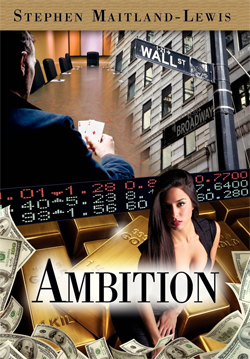
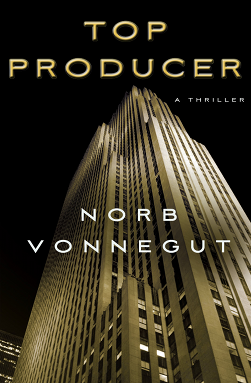 Vonnegut employs the first-person point of view, as well as the financial jargon of a professional, to convincingly put the reader in the shoes of a successful stockbroker in Midtown Manhattan. Grove O’Rourke, Southern-born and Harvard-educated, works for an investment bank, a place where “the elite go to get ideas and leave their money.” He handles approximately two billion dollars, and being a “top producer,” consistently delivers good returns.