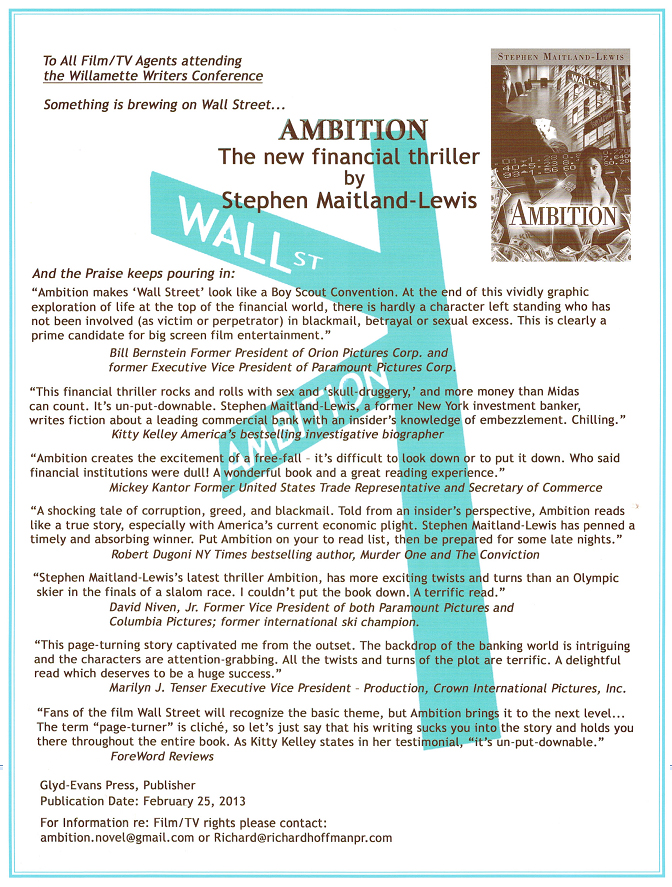
When I saw the ad in the Willamette Writers conference brochure for Stephen Maitland-Lewis’s new novel, Ambition, the lavish endorsements primed me for reading the business fiction answer to Dostoevsky’s Crime and Punishment. (Among the blurbs were ones by Kitty Kelley and Robert Dugoni – the ad appears below.) So I downloaded the Kindle version and read it over the next twenty-four hours.

The story begins as a very nervous banker, George Tazoli, is attempting to withdraw $75,000 and wire $7 million from an account in a Los Angles bank, which is just around the corner from the bank where he had worked until “this morning.” We can surmise that George is probably a rogue banker who is getting ready to bolt with stolen money. The scene is just a prologue, though, and the first chapter moves us several months backwards in time.
Peter Donovan, the president of the bank, is married to an independently wealthy social climber. Their only daughter Samantha (Sam), also independently wealthy, is a sexually liberated, self-indulgent, and aggressive climber who, much to the chagrin of her parents, has her sights set on George Tazoli.
Peter is under intense pressure from his board members, most of whom consider him to be incompetent and somewhat of a joke. The board instructs Peter to rid the bank of more than a billion dollars in problem loans. Peter decides to task George with liquidating the loan portfolio and transfers him to New York in order to, shield him from “interference” from other bank officers and board members, and, more personally, cool his daughter’s ardor. The assignment also gives Peter an excuse for periodic trips to New York to participate in high stakes poker games and sexual debauchery in his Manhattan honey pad.
During a short stay at Peter’s apartment, George discovers evidence of Peter’s bad habits and immediately shows the evidence to his cousin Draeger, a shrewd, unscrupulous operator at a small brokerage firm. They formulate a plot to embezzle funds from the sale of the problem loans and use the “evidence” to blackmail Peter in case he discovers their chicanery.
With the assistance of Draeger’s sister-in-law Xhana, with whom George is having an affair, the cousins start selling the problem loans and pocketing the spreads between the bank’s minimum selling price and the price they actually receive from the buyers. The “take” quickly escalates to tens of millions of dollars. Meanwhile, Sam gets pregnant and insists on a quick, private Las Vegas wedding; she sweetens her demand by giving George wedding presents worth several million dollars.
When Peter learns about the wedding, he is furious with George, whom he regards as a low-life fortune hunter. When Peter threatens to fire him, George reveals the evidence of Peter’s extra curricular activities, thus buying himself and Draeger some time to continue their embezzlement. But Peter hires a private detective who discovers George’s affair with Xhana. The discovery unravels their scheme and George and Draeger flee to avoid arrest.
So, does this novel live up to it’s endorsements? Not quite. They promised five-star entertainment. A two-star beach read is more realistic. Here are my top five criticisms.
- Absence of a plausible conceit. The plot hinges on the fact that the board, whose members think Peter is inept, allowing Peter to personally take charge of liquidating a billion-dollar problem loan portfolio in the absence of the normal checks and balances that banks must enforce to comply with bank regulations.
- A cast of unlikable characters. Every single character in the novel is ethically challenged, devoid of empathy, and obnoxious. They are willing to steal, lie, manipulate, and betray to serve their selfish agendas, making it difficult for readers to root for any of them.
- Some of the key turning points depend on coincidences. For example:
- George discovers Peter’s gambling and prostitute habits solely because Peter failed to lock the safe in which he stores the video camera and Polaroid photos that serve as evidence; notwithstanding the fact that Peter’s wife occasionally uses the apartment. Without that contrived incident, there would be no novel.
- Peter arranges to put out a contract on George’s life. When the assassin is about to kill George, he recognizes George’s Uncle Frank, an ex-NYPD cop with whom he served, and who conveniently drops into George’s life to invite him to a birthday party. The two old police buddies work out a scheme to allow George to escape so he can flee to Brazil. It is patently obvious to the reader that the only reason Uncle Frank is a character in the novel is to foil Peter’s plot to kill George. Talk about coincidences!
- Finally, (and this may be just the author’s style) I found the dialog to be plodding and turgid and the exposition less than elegant.
So, why the enormous gulf between the ebullience of the endorsements and the quality of the novel? It’s obvious. Maitland-Lewis has lots of celebrity friends, all of whom are willing to lend a hand to promote his career. Good for him!
I wish Maitland-Lewis every success in selling Ambition to a producer. In the hands of a good scriptwriter and directors it might make a passable movie (ala Arbitrage or Paranoia).
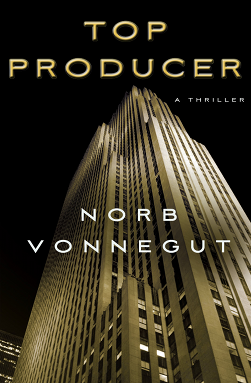 Vonnegut employs the first-person point of view, as well as the financial jargon of a professional, to convincingly put the reader in the shoes of a successful stockbroker in Midtown Manhattan. Grove O’Rourke, Southern-born and Harvard-educated, works for an investment bank, a place where “the elite go to get ideas and leave their money.” He handles approximately two billion dollars, and being a “top producer,” consistently delivers good returns.
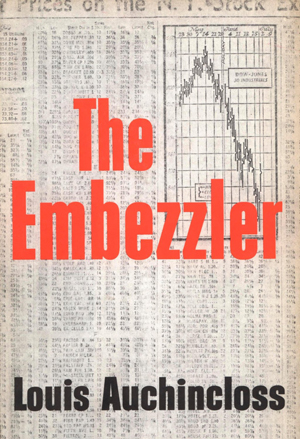 It is therefore somewhat prescient that Auchincloss’s 1966 novel, The Embezzler, addressed an issue that would both dominate the headlines and affect a substantial portion of society 42 years later—namely flagrant malfeasance of highly placed and trusted members of the financial elite.
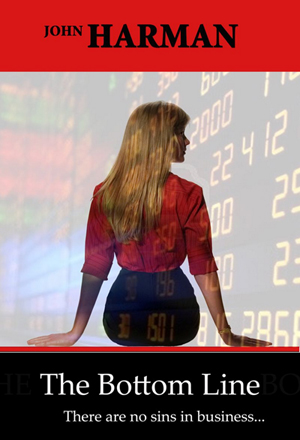 Richard Hoecheck is a hard-driving, psychopathic CEO “who will stop at nothing to achieve his bottom line.” Two of his minions—the beautiful financial executive Madelene Weybourne, and the creative, conflicted, and reckless Tony Oldbidge, who are surreptitiously having an affair—are inadvertent, willing codependents of Hoecheck. They facilitate his schemes to amass assets under the umbrella of his large conglomerate, an investment staple of many middleclass and wealthy families. Hoecheck is achieving high shareholder value through nefarious means (including insider trading, blackmail, and murder) but Madelene and Tony are initially exhilarated by the job’s frenetic wheeling and dealing. As they gradually become aware of the criminal roots of their boss’s empire, they conspire to bring him down.
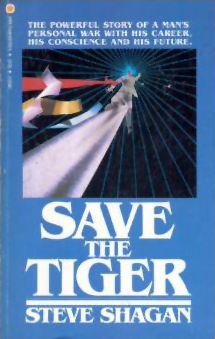 Having survived for fifteen years, Harry and his partner Phil, an accountant, are in the final stages of bringing out a new line women’s dresses, and desperately need financing. They don’t have enough collateral to get the bank financing they need, so they are exploring other alternatives, including torching a warehouse that they own for the insurance proceeds. In addition to his financial challenges, preserving this “house of cards” requires him to (1) mediate the conflict between his creative designer, Rico, and his old Russian cutter, Meyer; (2) coordinate the liaison between a large buyer who expects to be “serviced,” and the prostitute he has on retainer; (3) cope with recurring PTSD episodes resulting from combat in World War II; and (4) prepare for the IRS’s audit of books that they both know have been cooked.